

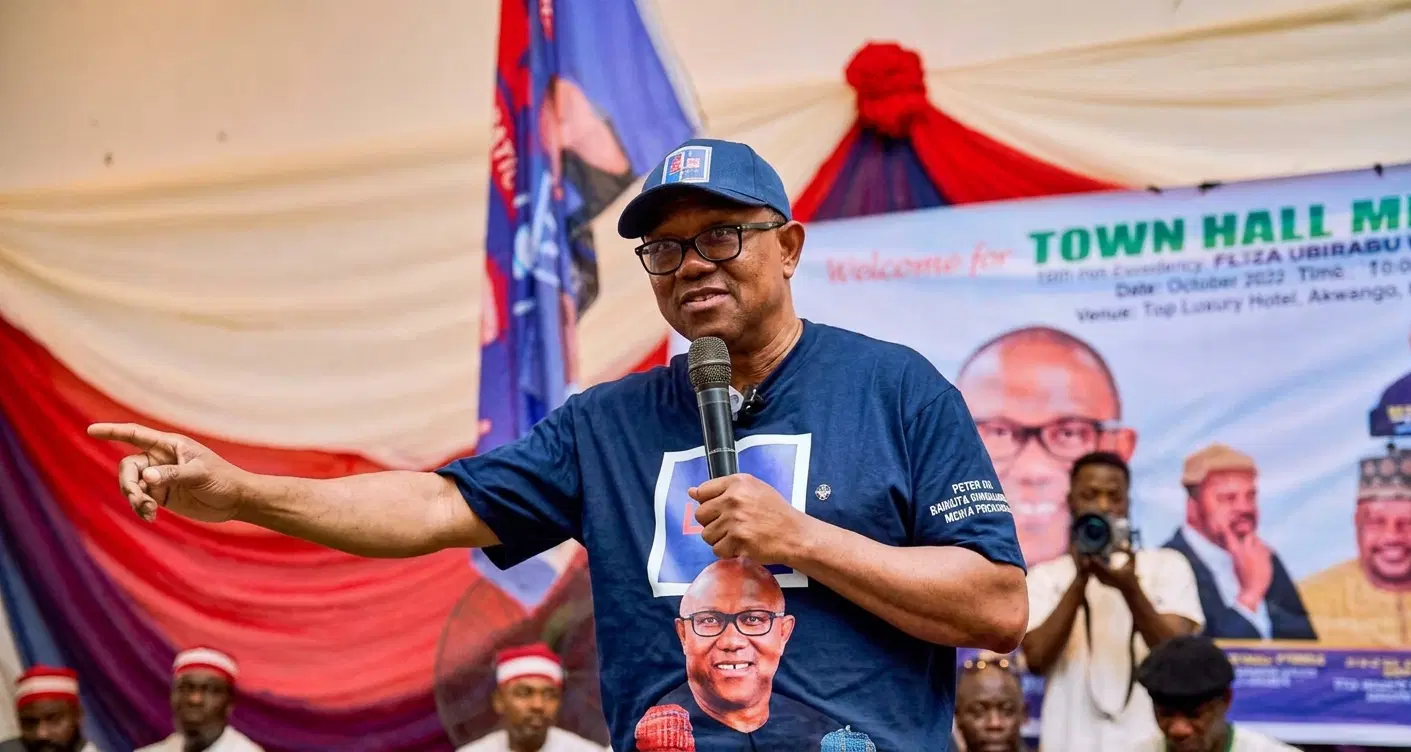
The NDC 2027 Presidential candidate, Peter Obi.
The Nigeria Democratic Congress (NDC) has suffered a string of defections involving prominent party chieftains, candidates and grassroots leaders who have moved to rival political parties, including the All Progressives Congress, African Democratic Congress, Social Democratic Party and Peoples Democratic Party.
The departures have raised questions about the party’s strength, particularly in the North, and its ability to mobilise supporters ahead of the 2027 general elections.
Some defectors have cited internal disagreements, while others have announced their decisions to join rival parties alongside their supporters.
Here are seven notable defections from the NDC.
1. Uka Ndubuisi — APC
The NDC deputy governorship candidate in Ebonyi State, Uka Ndubuisi, defected to the APC on Thursday at the ruling party’s governorship campaign rally in the state.

Ndubuisi, who also served as the NDC National Youth Publicity Secretary, announced his decision to join the APC, pledging to transfer the party’s structure in Ebonyi to his new political platform.
His departure represents a loss for the NDC in Ebonyi, where he had been part of the party’s governorship campaign ticket.
2. Ibrahim Kashim — APC
The NDC governorship candidate in Bauchi State, Ibrahim Kashim, also left the party for the APC.

Kashim formally joined the ruling party on November 16 and called on his supporters, associates and political followers to move with him.
His defection is considered a setback for the NDC’s efforts to expand its influence in the North, particularly in Bauchi, where Peter Obi is expected to seek substantial electoral support in 2027.
3. Yinusa Tanko — SDP
Yinusa Tanko, a prominent supporter of Peter Obi and former National Coordinator of the Obidient Movement, left the NDC political fold for the SDP.

Tanko resigned as Obidient Movement coordinator and Obi’s Political Adviser on North on October 30 before joining the SDP.
He was subsequently unveiled as the National Coordinator of the SDP Presidential Campaign Council during its inauguration at the party’s national secretariat in Abuja on November 11.
His departure marked a significant change for a figure who had been closely associated with Obi’s political mobilisation efforts.
4. Abdulmumin Abdulsalami — ADC
The NDC’s former Deputy National Publicity Secretary, Abdulmumin Abdulsalami, resigned from the party around November 12 over alleged internal injustice, exclusion and frustration with influential party members.

About two weeks after leaving the NDC, Abdulsalami joined the African Democratic Congress.
His exit added to the party’s growing list of departures involving members who have expressed dissatisfaction with its internal affairs.
5. Godwin Obasi, others — PDP
In September, a group of defectors in Enugu State announced their departure from the NDC for the Peoples Democratic Party.

The group, led by Chief Godwin Obasi, claimed to comprise more than 6,000 members drawn from the state’s 17 local government areas and 260 wards.
The mass defection was presented as a major loss for the NDC’s grassroots structure in Enugu, given the number of communities and ward structures the group claimed to represent.
6. Haladu Sa’adu, Mannir Umar, others — APC
The NDC also lost several grassroots leaders in Kano State to the APC on November 16.

Among the defectors were the party’s vice-chairman in Bichi Local Government Area, Haladu Sa’adu, five ward chairmen, treasurer Mannir Umar, ward secretaries, women and youth leaders, as well as other members of the Kwankwasiyya movement.
Their departure was another blow to the party’s local organisational structure in Kano, a state regarded as an important battleground in the North.
7. Rufai Hanga — APC
The NDC’s only senator from the North, Rufai Hanga, also defected to the APC.
Hanga’s departure further weakened the party’s representation in the Senate from the region and added to concerns about its ability to maintain a strong political foothold in northern Nigeria ahead of the 2027 elections.

His exit, alongside those of governorship candidates, party executives and grassroots leaders, has intensified scrutiny of the NDC’s internal cohesion and mobilisation capacity.
Despite the defections, some NDC leaders have dismissed concerns about the party’s electoral prospects, insisting that Obi remains capable of meeting the constitutional requirements to win the presidency in 2027.
