

Despite its huge potential of boosting Nigeria’s GDP, and enhancing its economic fortunes, lack of access to formal finance still remains a major challenge confronting the care sector as 76 percent of childcare entrepreneurs lack access to formal finance, the World Bank has said.
The IFC Head of Office, Nigeria, Christian Mulamula made the observation at the National Care Forum, tagged “Advancing Nigeria’s Care Economy: Jobs, Growth & Productivity,” organised by the World Bank, in Lagos.
Speaking on behalf of the World Bank, Mulamula argued that Nigeria’s care economy holds a lot of potential and opportunity for investors, carers and businesses, noting that the sector, if well explored, is capable of creating jobs, enhancing productivity and giving quality care to citizens.
He therefore told investors, financial institutions, governments and others in the care sector on the need to take the sector seriously, noting that a lot of Nigerians, especially women, are in dire need of care for their children or loved ones.
Mulamula described a research which revealed that 67 percent of working parents in the country would be more productive with better access to childcare, as an indication of the significant social and economic opportunities in the sector.
“So, investing in care is about releasing time, talent and productivity into the economy, while giving children a stronger start in life,” he stated.
He stated that with the figures revealing that 92 percent of childcare facilities in the country are small and independently -owned, and 76 percent of childcare entrepreneurs lack access to formal finance, it means the nation’s care sector is challenged and needs significant attention.
The IFC boss explained that the essence of the forum was to create a platform for stakeholders in the economy to discuss the care economy and chart possible paths towards making the sector create jobs, enhance productivity and growth.
He added that the federal government had taken the right step by introducing the National Care Policy, but noted that the challenge around implementation still requires the government, employers, care providers, financial institutions and development institutions to tackle since no single institution can build a care economy.
He described the care agenda as connecting directly with the World Bank’s focus in Nigeria on jobs, human capital, early childhood development, private sector growth and women’s economic participation.
Commending the World Bank and the IFC for the timeliness of the event, the Lagos State Governor, Babajide Sanwoolu, represented by the Commissioner Finance and Chairman, Governing Board of Lagos Procurement Agency, Mr. Abayomi Olayomi, noted that economic productivity is not determined solely by the availability of jobs, infrastructure investment capital, but also on people getting the support needed to participate fully in economic activities.
Describing the forum as timely, the governor commended the World Bank for the initiative and expressed the readiness of the state government to continuously support the care sector in the state.
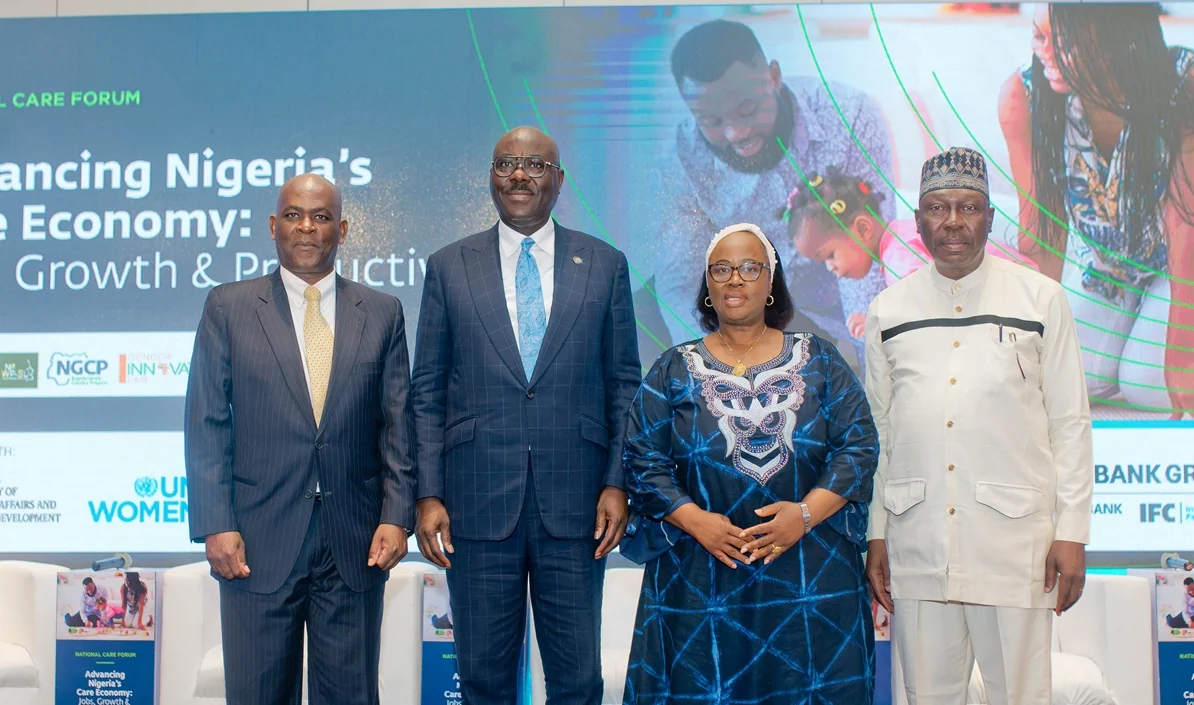
Caption:
From Left
Head of Office, Nigeria, International Finance Corporation (IFC), World Bank Group; Christian Mulamula; Representative of the Lagos State Governor, Honourable Commissioner for Finance and Chairman, Governing Board, Lagos State Public Procurement Agency, Mr. Abayomi Olayomi; UN Women Country Representative to Nigeria, Lady Beatrice Enyong; and Representative of the Honourable Commissioner for Women Affairs and Social Development, Mr. Andrew Ali Madugu at the forum.
WATCH TOP VIDEOS FROM NIGERIAN TRIBUNE TV
