

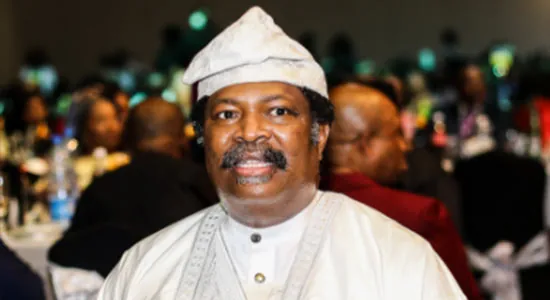
The simmering disagreement between First Bank and General Hydrocarbons Limited (GHL) over what is believed to be a contractual dispute has taken a new twist.
The latest development followed the declaration on Tuesday by the police that GHL Chairman and media mogul, Chief Nduka Obaigbena, was wanted.
The dispute centres on the operation of Oil Mining Lease (OML) 120, operated by GHL, whose chairman is Obaigbena, who doubles as the Chairman of THISDAY/ARISE Media Group.
In 2025, the two parties engaged in an intense media war, beginning in January when the dispute first became public following a court order allegedly freezing accounts belonging to General Hydrocarbons over a $225 million debt owed to First Bank.
The judgement, which became public in January, was delivered on December 30, 2025.
In the judgement, a Federal High Court in Lagos issued a series of orders, including Mareva injunctions, freezing assets and accounts linked to General Hydrocarbons Limited, its affiliates and prominent individuals, including Obaigbena.
The court based its decision on allegations of unpaid loans totalling $225.8 million, which were issued in September 2024.
The plaintiffs in the case were First Bank of Nigeria Limited and FBNQuest Trustees Limited, both subsidiaries of FirstHoldCo, formerly known as FBN Holdings Plc.
The court further directed all major commercial banks and financial institutions in Nigeria to freeze the defendants’ accounts and restrict access to funds and assets up to the value of the claim pending further legal proceedings.
Financial institutions were also restrained from releasing funds or dealing with assets linked to the defendants.
However, GHL fought back following the widely publicised judgement. In an equally publicised response, the oil company denied owing First Bank.
Speaking through its Director of Strategy and Operations, Abdelmuizz Bello, the company explained that it entered into a legally binding and enforceable Subrogation Agreement with First Bank on May 29, 2021.
Under the agreement, First Bank undertook to fund GHL’s exploration, production and development activities on OML 120 in exchange for a 50:50 sharing of profits from oil proceeds and taxes over eight years.
According to GHL, First Bank’s 50 per cent share would be used to pay down its non-performing loans (NPLs) of about $718 million, which had been discounted to $600 million to resolve its solvency challenges.
The company said the agreements signed with GHL enabled First Bank to return to good financial standing, allowing it to declare a profit of N151 billion ($377.5 million), instead of a loss of N302 billion at the prevailing exchange rate.
GHL added that the agreements clearly stated that the non-performing loans had nothing to do with the company, beyond the fact that 50 per cent of the profits from OML 120 due to First Bank under the Subrogation Agreement would be used by the bank to settle the shortfall created by the NPLs in its books.
However, GHL alleged that First Bank failed to meet its financial commitments under the agreements, leading to operational difficulties and preventing the company from achieving its production targets.
On January 30, 2025, the Federal High Court in Lagos vacated the Mareva injunctions that had frozen $225.8 million in assets and accounts linked to GHL, its affiliates and individuals, including Obaigbena.
Justice Deinde Dipeolu, in his ruling, held that the orders should be set aside because of an earlier preservative order issued by a sister court on December 12, 2024, pending arbitration.
Following the ruling, banks immediately complied by lifting the restrictions, according to a statement issued by GHL.
Shortly after securing the favourable ruling, directors of the oil and gas company took a further step by instituting a defamation suit against First Bank, seeking up to $1 billion in damages over alleged defamation and the wrongful freezing of their accounts.
As the dispute between the parties escalated, the Federal High Court in Port Harcourt, Rivers State, ordered the arrest of the entire cargo aboard the Floating Production, Storage and Offloading (FPSO) vessel Tamara Tokoni, which is linked to GHL.
Justice E.A. Obile issued the ruling in an ex parte application filed by First Bank on January 9, 2025. The bank insisted on a $19,752,304.84 bank guarantee and the payment of costs by GHL and other parties before they could deal with or transact the crude oil cargo aboard the vessel.
The application sought to secure First Bank’s financial claim against GHL and the crude oil cargo aboard the FPSO Tamara Tokoni, as well as against the owners, operators and master of the vessel, who were listed as the first to fourth defendants.
Following the court order, the Nigerian Navy reportedly arrested the vessel and detained the cargo aboard it pending further orders.
However, on March 26, 2025, the Federal High Court in Port Harcourt dismissed the suit filed by First Bank against GHL.
Justice E.A. Obile dismissed the entire suit on the grounds that the court lacked jurisdiction to entertain the case, upholding the arguments of counsel to GHL, Biodun Layonu (SAN).
First Bank subsequently disclosed that it had appealed the Port Harcourt court’s decision, disagreeing with the ruling that the dispute was a debt recovery matter rather than an admiralty claim.
The bank also expressed dismay at the court’s declaration that the arrest order against the cargo aboard the FPSO had expired by effluxion of time within 14 days of its issuance, despite the order having been obtained ex parte.
In July 2026, the Supreme Court ordered the immediate handover of the crude oil aboard the FPSO Tamara Tokoni to General Hydrocarbons Limited.
The apex court gave the order while ruling on the dispute between First Bank and the oil company.
In a unanimous judgement, the Supreme Court also dismissed the case instituted by First Bank, holding that the dispute was contractual in nature and did not fall within the jurisdiction of the Federal High Court as an admiralty matter.
The Supreme Court further set aside the judgement of the Court of Appeal, ruling that the lower courts lacked jurisdiction to entertain the matter as an admiralty case.
The panel comprised Justices Uwani Musa Abba Aji, Adamu Jauro, Emmanuel A. Agim, Tijjani Abubakar and Habeeb Adewale Abiru.
Obaigbena, others declared wanted
The dispute took another turn on Tuesday when the police declared Obaigbena and eight others wanted.
The Assistant Inspector-General of Police in charge of Zone 2, Olohundare Jimoh, announced at a press briefing in Lagos that nine persons had been declared wanted over an alleged threat to the life of First Bank Managing Director, Olusegun Alebiosu.
Jimoh said a parcel containing two rounds of 7.62mm live ammunition had been delivered to Alebiosu’s residence, disguised as a fashion-design gift and brought by an unidentified dispatch rider.
He said the incident was reported to the police on May 7, after the parcel was opened the following morning.
The discovery prompted an investigation involving crime detectives, ballistic experts and forensic investigators.
Jimoh said preliminary investigations linked the alleged threat to First Bank’s loan recovery activities involving customers who owed the bank billions of naira.
He said some of the customers had reportedly confronted bank representatives and threatened Alebiosu.
He said 10 customers and other individuals were invited for questioning on November 12, but only one honoured the invitation.
Those declared wanted include Ernest Azudialu-Obiejesi, Managing Director of Nestoil; Nnenna Azudialu-Obiejesi of Nestoil Plc; and Tope Shonubi of Sahara Group Limited.
Others are Henry Kayode Ojogho of Broron Limited; Emmanuel Iheagwazi of Necit Nigeria Limited; Eze David of Energy Shield Petrochemical; and Emmanuel and Victoria Orim of Luzen Plaza.
I have not received police invitation — Obaigbena
In a swift reaction, Obaigbena said he had not received any invitation from the police or any other law enforcement agency concerning an investigation into a petition by Alebiosu.
In a statement issued by his office, Obaigbena described reports that he had been declared wanted over the petition as a “desperate smear campaign”.
“First, Nduka Obaigbena has received no invitation concerning any investigation from the Nigeria Police or indeed any law enforcement agency at any of his addresses.
“We have checked all our offices and there is no such invitation.
“Secondly, Nduka Obaigbena has been in communication with the highest authorities of the Nigeria Police Force over the last few weeks and, more recently, last Thursday, November 19, discussing State Police and how best to make it work in Nigeria. And there was no indication that the Police needed his attention,” the statement read.
The statement also said Obaigbena had been engaging Alebiosu over debts owed to the THISDAY Newspapers and ARISE Television Group by First Bank since the bank issued a letter of non-indebtedness to the media group.
It said the discussions followed the Supreme Court’s ruling of July 3, 2026, which dismissed First Bank’s case against GHL in a unanimous 5-0 decision.
According to the statement, FirstBank and GHL had since explored an out-of-court settlement following the judgement.
It added that Obaigbena had met with First Bank Chairman, Femi Otedola, twice: at the homes of Aliko Dangote and at the Hôtel du Palais in Monaco, to discuss possible settlement arrangements.
The statement further claimed that Alebiosu had visited Obaigbena’s Ikoyi office three times.
“Even the debt owed by FBN to THISDAY and ARISE TV Group is being settled in an amicable way without the need to go to court.
“Therefore, there is no basis for any police invitation on any matter affecting FirstBank or Mr Obaigbena,” it added.
The statement said Obaigbena, a member of the 1995 Constitutional Conference Committee, respected the police, supported law and order, and remained a law-abiding citizen.
It also denied that Obaigbena had threatened Alebiosu, insisting that the dispute with First Bank was not personal.
The statement further claimed that Alebiosu had told Obaigbena that his tenure would expire in April next year and that some executive directors were competing to succeed him.
It questioned whether the police had interrogated the directors allegedly jostling to succeed Alebiosu.
UPDATE NEWS:
Nigerians can now invest ₦2.5 million on premium domains and profit about ₦17-₦25 million. All earnings paid in US Dollars. Rather than wonder,
click here to find out how it works.
