

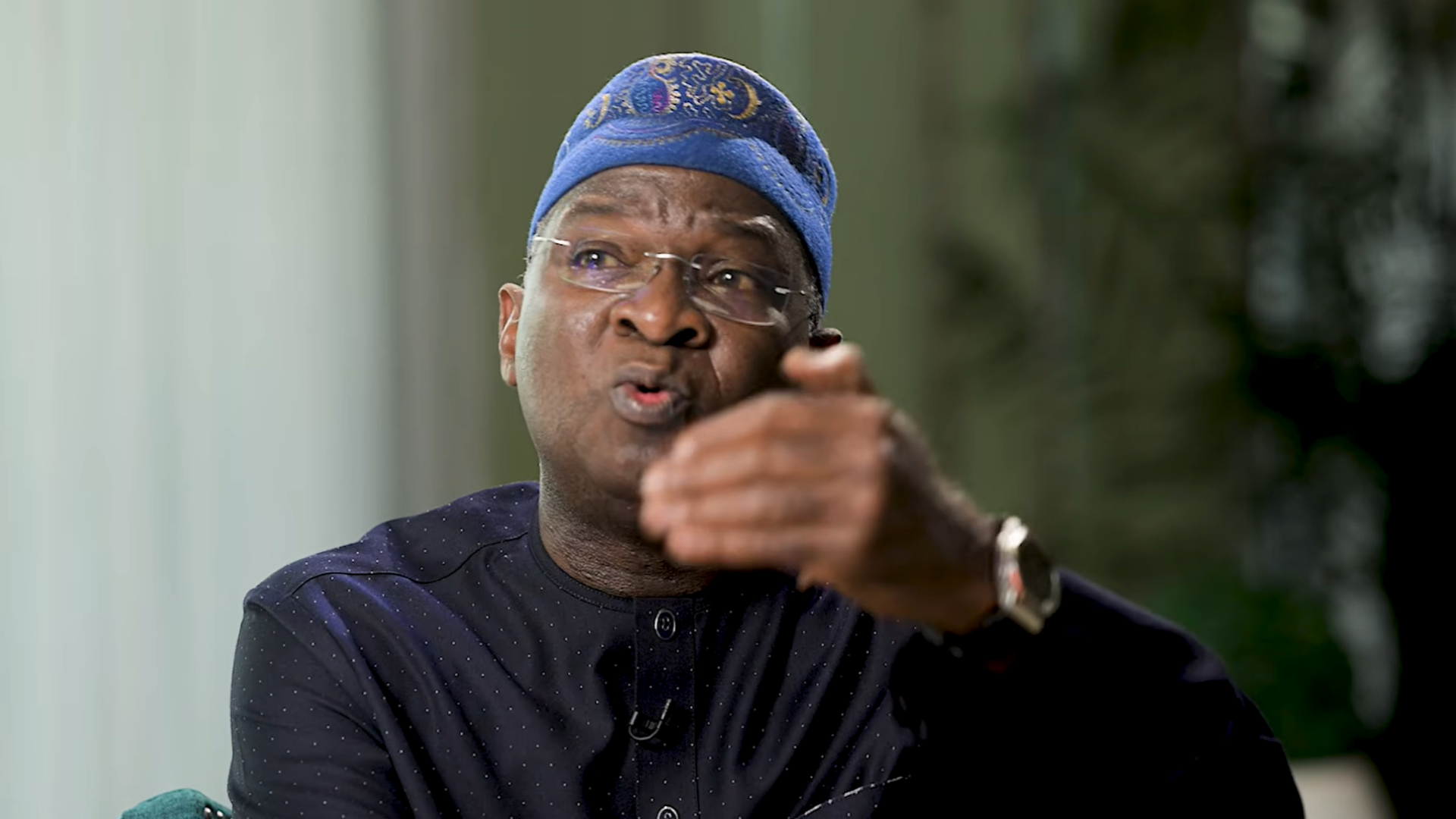
Babatunde Fashola, Nigeria’s former power minister, blamed the country’s procurement rules for delays in deploying electricity infrastructure, saying bureaucracy and inadequate contractor payments left hundreds of containers of power equipment stranded at the ports during his tenure.
Speaking on Arise TV, Fashola said he recovered about 910 containers of electricity equipment previously trapped at the ports after renegotiating contracts and deploying engineers from the former National Electric Power Authority (NEPA) and Transmission Company of Nigeria (TCN) to install the equipment across the country.
Fashola, who was power minister from 2015 to 2019 under late former president Muhammadu Buhari, said the backlog arose after contractors importing equipment from Europe faced rising costs that were not covered by their contracts, leaving them unwilling to proceed with installations while shipping companies and warehouse operators remained unpaid.
His comments came after the Nigerian Customs Service began releasing 98 of 300 containers of crucial power equipment in November, reported to be stuck at several ports in the country for up to 20 years before the federal government waived some fees.
“When the contracts were awarded, most of this equipment had to be ordered from Europe. In the process of ordering and all of that, prices changed. There were no budgetary provisions,” he said of the former.
Contractors subsequently sought contract reviews to reflect the higher costs, while the equipment remained at the ports, accumulating shipping and warehousing liabilities.
Under the payment structure, contractors were initially paid about 15 percent, compared with as much as 70 percent he said would have enabled them to procure equipment earlier and avoid subsequent price increases.
“If those contractors had been paid up to 70 percent, they would have imported the equipment and brought it in before the price change,” Fashola said.
Section 35 of the Public Procurement Act of 2007 provides for further payment from the 15 percent “mobilisation fee” to be supported by an interim performance certificate, BusinessDay found.
He argued that procurement rules were poorly aligned with the pace of infrastructure development, making it difficult for government projects to respond to changing costs in international markets.
Fashola said the government eventually cancelled or adjusted some contracts, recalled engineers to install the equipment and deployed it to locations including Kuje, Katampe, Isolo and Ikorodu to expand the electricity grid.
He said the experience exposed weaknesses in Nigeria’s procurement framework, particularly the time required to award contracts and restrictions on payments to contractors.
A reaccumulation of electricity equipment at the ports, received with disappointment by stakeholders, will test federal resolutions of the procurement and contract-financing imbroglio, particularly as Nigeria continues to invest in transmission infrastructure to improve its electricity supply.

Bethel Olujobi is the Trade Correspondent at BusinessDay. He brings scarce insight into Nigeria’s maritime policies and the changing currents of global commerce defining the country’s position in international trade. Before this, he reported on foreign relations, migration and sports for BusinessDay. He holds a Bachelor’s degree in Mass Communication, and is an alumni of the CNN Academy and the Financial Times News School. He is certified by Reuters and Google. He is based in Lagos, Nigeria.


