

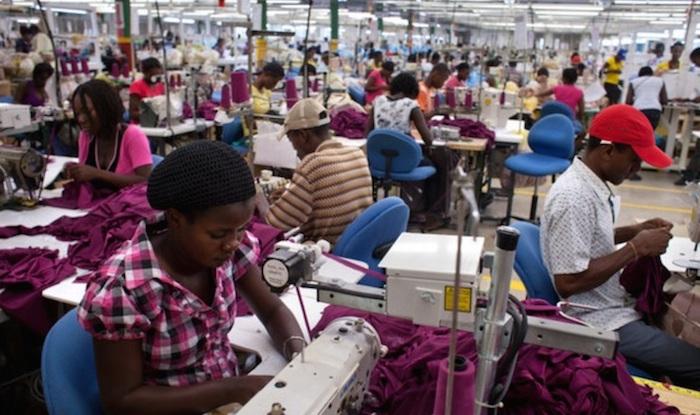
Nigerian small and medium-sized enterprises are curbing graduate hiring as surging operating costs squeeze margins, limit expansion and weaken their capacity to absorb new entrants into the labour market.
Muda Yusuf, chief executive officer of the Centre for the Promotion of Private Enterprise (CPPE), said in a statement that high credit costs, energy costs, infrastructure deficits, logistics bottlenecks, taxation, and regulatory burdens are constraining investment and business growth, leaving many firms unable to create quality graduate-level jobs.
“The employability debate must consequently distinguish between skills mismatch and insufficient demand for skilled labour,” Yusuf said.
Yusuf said concerns over the employability of Nigerian graduates and the widening disconnect between tertiary education and workplace requirements have considerable merit.
But he said the narrative that Nigerian institutions are producing a generation of largely “unemployable graduates” is too sweeping, lacks nuance, and isn’t supported by the diversity of outcomes across disciplines and institutions.
There is undoubtedly a skills and curriculum challenge, Yusuf said. But there is equally a job-creation problem, a labour-market absorption problem, an employer-training deficit and a wider productivity problem in the economy.
These are distinct but interconnected challenges and should not be treated as one and the same, he said. A wrong diagnosis inevitably produces a wrong policy response.
Hiring freeze is not proof of unemployability
A major weakness in the current debate is the tendency to use graduate unemployment as evidence of graduate unemployability, Yusuf said. The two are related, but they are fundamentally different.
A graduate may possess reasonable technical, analytical and interpersonal capabilities and still be unemployed because appropriate jobs are unavailable. Conversely, employment does not necessarily demonstrate an absence of skills deficiencies.
Nigeria’s employment challenge must therefore be situated within the structure and performance of the economy, Yusuf said.
The formal private sector operates under considerable cost pressures, while the economy is characterised by a very large informal sector and a relatively narrow base of high-productivity formal employment.
That creates a structural mismatch between the rapidly expanding population of tertiary-education graduates and the number of graduate-level jobs being generated.
For SMEs, which account for the bulk of enterprises in Nigeria, the squeeze is particularly acute. When energy, logistics and borrowing costs rise, hiring and training are often among the first budgets to be cut.
Improving curricula without simultaneously creating an economy capable of absorbing skilled graduates will not resolve graduate unemployment, Yusuf said.
There is legitimate concern about the relevance of some university curricula, Yusuf said. In a rapidly changing economy, academic programmes cannot remain substantially unchanged for 10, 20 or 30 years while technology, production processes, business models and workplace requirements are changing continuously.
Digitalisation, artificial intelligence, automation, data analytics, financial technology, renewable energy and new production systems are redefining occupational requirements across sectors.
But the mismatch is not uniform, Yusuf said. Several professional and practice-oriented disciplines have significant practical and clinical components, including medicine, nursing, pharmacy, laboratory sciences, architecture, ICT, surveying and creative arts.
The significant international demand for Nigerian-trained doctors, nurses and other professionals provides an important counterpoint to the sweeping proposition that Nigerian tertiary institutions generally produce graduates who cannot function effectively in the workplace, he said.
The more serious employability gaps appear in programmes where practical exposure, workplace interaction and contemporary professional applications are limited.
Even within these disciplines, outcomes vary significantly across institutions and individuals.
The appropriate diagnosis is therefore not that “Nigerian graduates are unemployable,” Yusuf said. It is that the quality, relevance and practical orientation of graduate education are uneven.
SMEs cannot afford to train like before
Yusuf also questioned the growing expectation that fresh graduates should arrive in organisations fully equipped to perform highly specialised corporate functions from their first day at work.
He said this expectation is neither realistic nor consistent with the historical experience of successful corporations.
For decades, leading banks, multinational companies and major Nigerian corporations recruited promising graduates from diverse academic backgrounds and invested significantly in management-trainee programmes, internships, apprenticeships, mentoring and structured professional development.
The underlying philosophy was sound, Yusuf said: educational institutions develop foundational human capital; employers develop firm-specific and industry-specific human capital.
The gradual weakening of structured graduate-training programmes in parts of the private sector has therefore contributed to the employability problem, he said.
What CPPE recommends
The CPPE recommends a shift from generalised criticism of Nigerian graduates towards a targeted human-capital development strategy, Yusuf said.
Its priorities include institutionalising periodic curriculum reviews with substantive participation by employers, professional bodies and industry practitioners; expanding internships, apprenticeships and structured industrial attachments; and establishing industry attachment and continuing professional development programmes for lecturers.
It also calls for greater participation of experienced industry professionals as adjunct lecturers, mentors and curriculum advisers; strengthening digital literacy, communication, analytical reasoning, teamwork, entrepreneurship and problem-solving; and rebuilding structured graduate-trainee programmes within the private and public sectors.
Other priorities include improving laboratories, workshops, studios, libraries and digital-learning infrastructure; developing credible labour-market information systems; reforming accreditation towards measurable learning outcomes; strengthening career counselling; and deepening partnerships between universities, polytechnics, research institutions, professional bodies and businesses.
Most importantly, Yusuf said, the government must pursue economic policies that stimulate investment, enterprise growth and the creation of productive formal-sector jobs.

Josephine Okojie-Okeiyi is a journalist with over five years’ reporting experience. She writes on industry, agriculture, commodities, climate change, and environmental issues.
She is fellow of Thomson Reuters Foundation and Bloomberg Media Initiative for Africa.


