

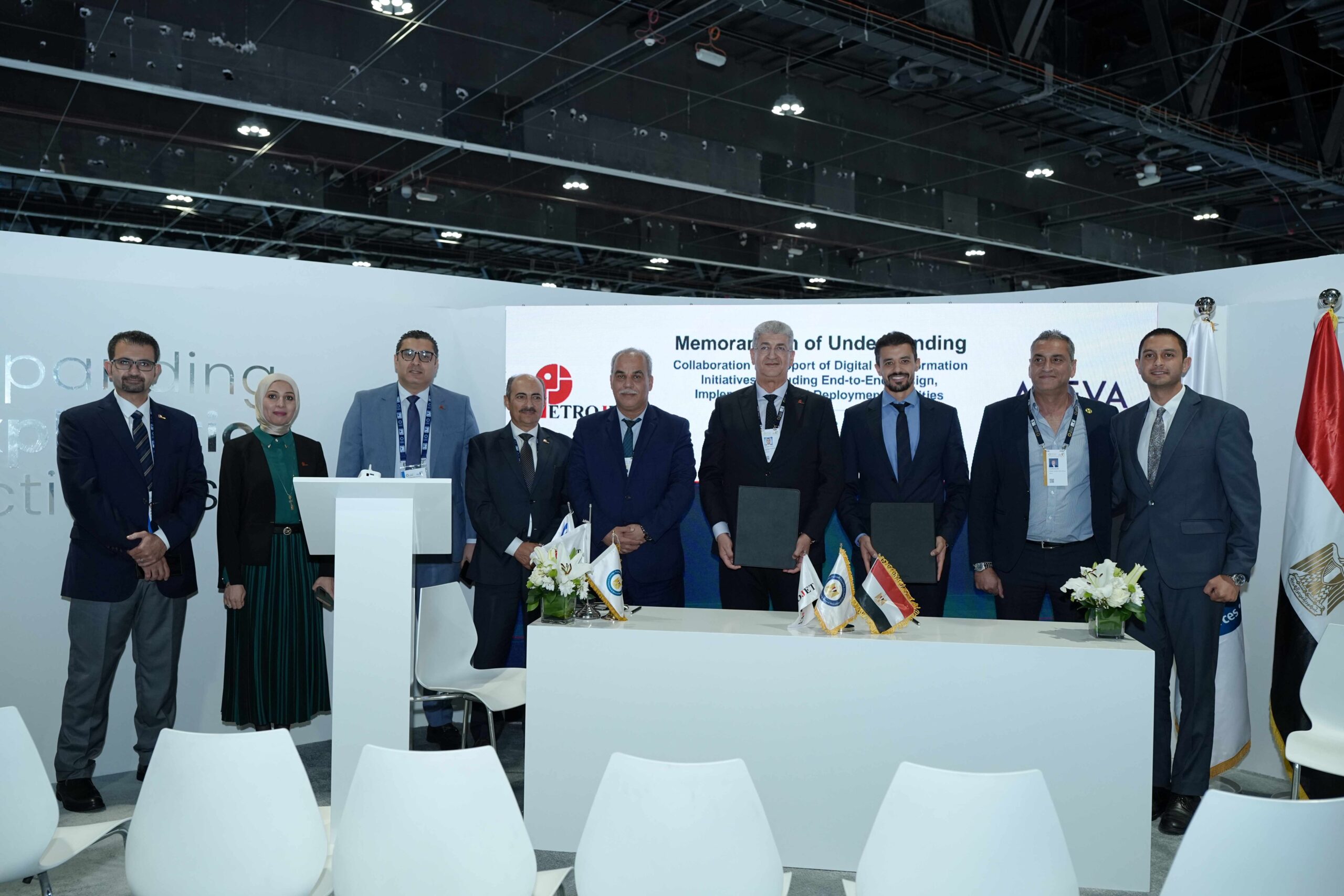
AVEVA, an industrial software company, and PETROJET, a major engineering and construction contractor in the Middle East and Africa, have signed a memorandum of understanding to introduce digital twin technology into major energy, industrial and infrastructure projects, in a move aimed at reducing project inefficiencies and improving operational readiness.
The partnership will focus on embedding digital engineering tools and integrated data management into project delivery, allowing information generated during design and construction to remain accessible and useful when completed facilities transition into operation.
Read also: Nigeria’s future Armed Forces: From counter-insurgency to a technology-driven military
The agreement comes as Egypt seeks to strengthen its position as a regional energy hub under its Egypt Vision 2030 development agenda, with digital transformation increasingly becoming a priority for improving industrial competitiveness and the delivery of large-scale infrastructure.
Under the MoU, the companies will explore digital transformation opportunities in mutually agreed projects where PETROJET serves as the engineering, procurement and construction contractor.
The collaboration will deploy AVEVA’s Unified Engineering and E3D Design software, among other digital solutions, to support engineering and design activities while improving the management, consistency and integration of project data.
A central feature of the proposed collaboration is digital twin handover, which involves transferring an integrated digital representation of an industrial facility, alongside its engineering information, to operators when construction is completed.
This is intended to address a recurring challenge in major infrastructure and energy projects: the fragmentation of engineering information between contractors, project owners and facility operators.
When project data is disconnected or inadequately transferred, operators can face difficulties accessing accurate engineering records, potentially increasing maintenance costs, delaying commissioning and creating additional work after facilities become operational.
By maintaining digital continuity from engineering and design through construction and handover, the companies aim to reduce information gaps, minimise rework and give asset owners better visibility into their facilities before operations begin.
“Capital projects performance is increasingly determined by the integrity of engineering data,” said Khaled Salah, vice-president, Africa, AVEVA.
Salah said the partnership would establish a foundation for consistent and connected engineering data that can be handed over as a digital twin, giving facility owners greater operational readiness from the first day.
The agreement also reflects a broader shift in the energy and infrastructure industries towards data-centric project delivery, where the value of digital technology extends beyond designing facilities to managing their entire operational lifecycle.
For PETROJET, the longer-term ambition is to become a digitally enabled engineering and construction contractor capable of delivering data-centric projects with digital twin handover across Egypt and other markets in the region.
AVEVA, meanwhile, will provide the industrial software capabilities supporting the proposed transformation, positioning its engineering platforms within projects delivered by one of the region’s established infrastructure contractors.
The commercial impact will therefore depend on how quickly the companies translate the framework into actual project deployments and whether digital twin handover becomes a standard component of PETROJET’s project delivery model beyond Egypt.

Royal Ibeh is a senior journalist with years of experience reporting on Nigeria’s technology and health sectors. She currently covers the Technology and Health beats for BusinessDay newspaper, where she writes in-depth stories on digital innovation, telecom infrastructure, healthcare systems, and public health policies.


