

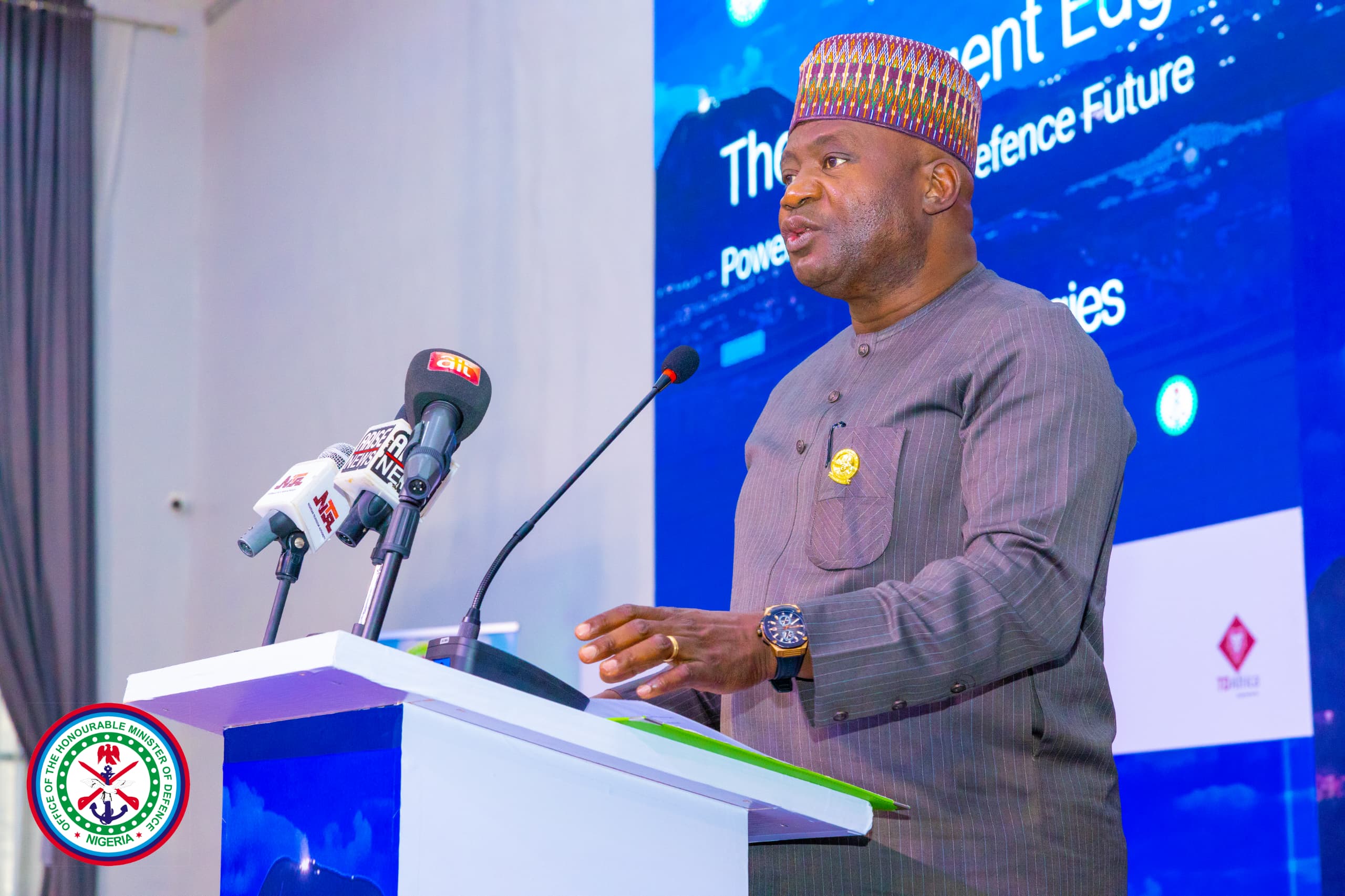
Christopher Musa, Minister of Defence, has challenged Nigeria’s defence experts, military leadership and technology stakeholders to prioritise indigenous technology development.
He warned that continued dependence on foreign solutions could limit the country’s capacity to respond effectively to evolving security threats.
Musa said Nigeria must move beyond being a consumer of imported defence technology to developing practical home-grown solutions capable of strengthening national security, improving military operations and supporting broader economic development.
The minister spoke at the opening of a two-day strategic workshop organised by the Ministry of Defence in collaboration with Dell Technologies in Abuja.
The workshop, which runs from November 24 to 25, 2026, is themed, ‘The Intelligent Edge: Powering Nigeria’s Defence Future’.
He said the changing nature of warfare had made technology an indispensable component of military strategy, operational effectiveness and command decision-making, noting that emerging technologies were reshaping how security threats were identified, assessed and neutralised.
“Technology is no longer optional; it is an essential pillar for effective military strategy, operations, and informed command decision-making,” Musa said.
According to him, developments in artificial intelligence, data analytics and digital systems are transforming modern security operations, making it necessary for the Nigerian Armed Forces to equip personnel with the appropriate technological tools to respond to emerging threats.
He said the ability of the military to remain effective would increasingly depend on its capacity to integrate modern technology into operational planning, intelligence gathering and decision-making processes.
Aligning the initiative with President Bola Tinubu’s Renewed Hope security vision, the defence minister stressed that modernising Nigeria’s defence architecture must go beyond acquiring sophisticated equipment from international technology providers.
He said international partnerships should be structured to facilitate genuine knowledge transfer, technical training and the development of local expertise rather than deepen the country’s dependence on foreign technology.
“Our objective must be to progressively build the capacity to operate, maintain, adapt, and where feasible, manufacture technologies tailored to our unique national requirements,” he said.
Musa emphasised that building indigenous technological capacity would strengthen the military’s operational capabilities while creating opportunities for Nigeria to develop solutions suited to its peculiar security environment.
He also called for defence innovation to contribute to national development, particularly through the empowerment of young Nigerians with digital skills required to participate in an increasingly technology-driven economy.
According to him, investments in defence technology should generate benefits beyond military formations by supporting skills development, innovation and wider economic opportunities.
The minister also challenged participants to ensure that the two-day engagement produced practical outcomes capable of informing the Ministry of Defence’s technology development priorities.
He said the ministry expected clear and implementable action plans rather than routine presentations, directing that the workshop’s closing joint communiqué should identify Nigeria’s critical technology gaps, priority requirements and concrete mechanisms for follow-up.
Musa assured participants that the ministry would review the workshop’s recommendations for possible immediate intervention, stressing the need to translate discussions into measurable improvements in the country’s defence capabilities.
Earlier, AS Bulus, the ministry’s organiser of the workshop, highlighted the importance of protecting sensitive defence information while deploying modern digital infrastructure to improve coordination among security agencies.
Bulus said safeguarding defence data and strengthening digital systems were essential to improving institutional resilience and ensuring effective collaboration across relevant government institutions.
He expressed confidence that the technological solutions and recommendations emerging from the workshop would benefit both the Ministry of Defence and the Nigerian Armed Forces.
Also speaking, Abimbola Owoeye, Country Manager of Dell Technologies, called for a shift in the way government institutions approach information and communications technology procurement and investment.
Owoeye argued that Nigeria’s defence sector needed to move away from fragmented annual ICT procurement towards a coordinated, long-term strategic investment programme supported by effective governance, accountability and measurable outcomes.
He said adopting a more structured approach to technology investment would enable the defence sector to build sustainable digital capabilities and improve the effectiveness of its operations.
He also urged stakeholders to adapt international technology standards and best practices to Nigeria’s specific operational requirements rather than adopt solutions without considering local realities.
The Ministry of Defence commended Dell Technologies and other participating stakeholders for their commitment to strengthening Nigeria’s defence architecture.


