

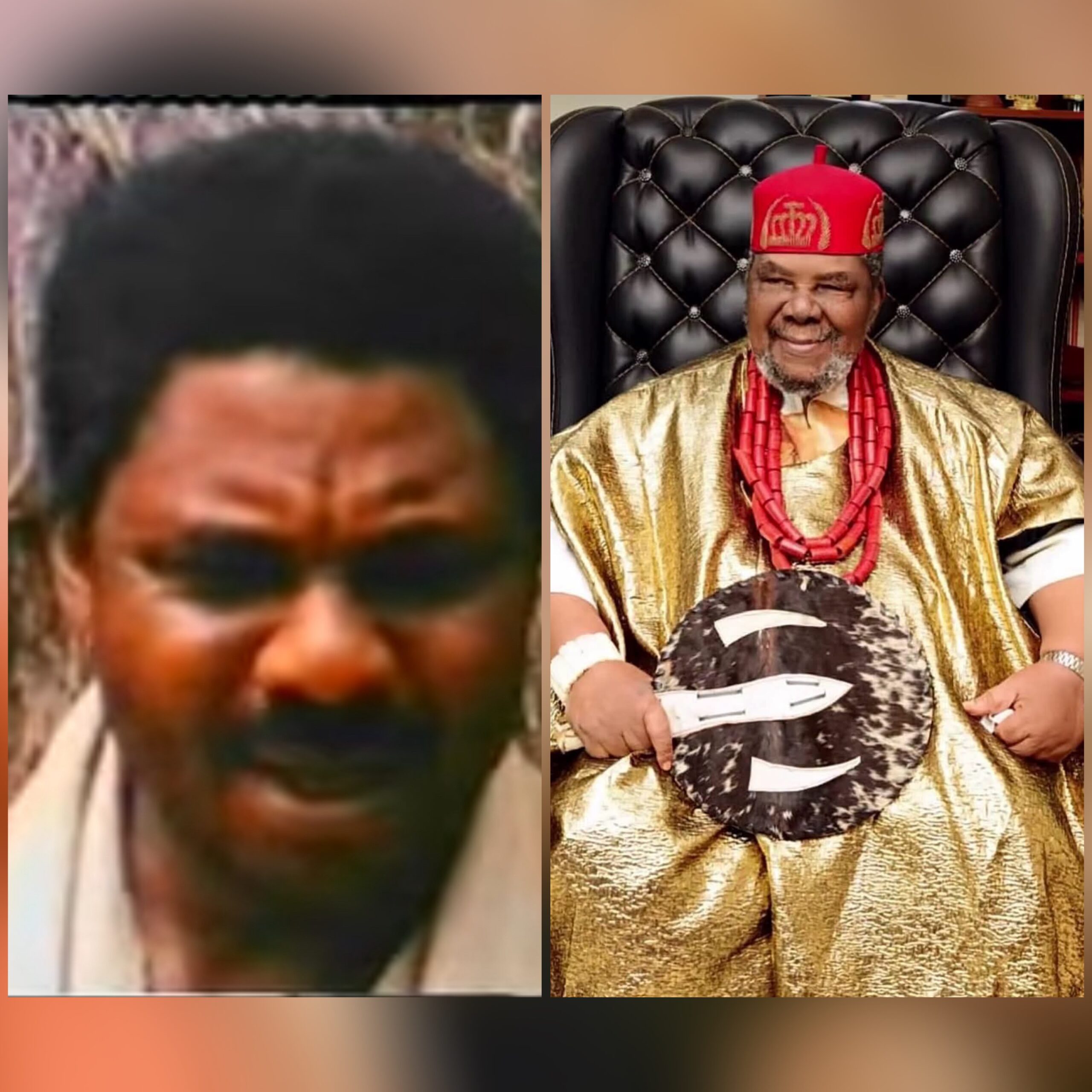
Pete Edochie’s career stretched across more than four decades, but few actors have maintained such a recognisable screen identity across different generations of Nigerian cinema. His deep voice, deliberate delivery and commanding performances made him a familiar presence in films about royalty, family, wealth, tradition and power.
His portrayal of Okonkwo in the Nigerian Television Authority’s 1987 adaptation of Chinua Achebe’s “Things Fall Apart” remains the pivotal performance of his career. It established him as an actor capable of translating one of African literature’s most complex characters into a memorable television performance.

But the role was only the beginning. As Nollywood expanded through the home-video boom of the 1990s and later moved into cinema releases and international streaming, Edochie remained a recognisable figure.
From the supernatural adventure of Igodo to the family-business drama of Lionheart, these are 10 productions that help explain his place in Nigerian screen history.
Rituals (1997) Drama

One of Edochie’s notable early Nollywood performances came in Andy Amenechi’s Rituals, a film that explored the relationship between political ambition, occult practices and the pursuit of wealth.
He played Don Pedro, a member of the Vampires’ Confraternity, a secret society whose members use ritual practices to pursue power and influence.
The film follows Desmond, played by Sola Fosudo, an aspiring politician whose ambitions lead him into the society and its demands for human sacrifice.
Rituals became part of the wave of Nigerian home-video productions that explored the relationship between wealth, corruption, political power and supernatural beliefs. Edochie’s performance reinforced his ability to play influential men whose public authority concealed darker interests.
Igodo: The Land of the Living Dead (1999)
Fantasy and adventure

Directed by Andy Amenechi and produced by Don Pedro Obaseki, Igodo remains one of the recognisable fantasy productions from Nollywood’s home-video era.
The film follows seven warriors sent on a dangerous mission to the Land of the Living Dead to retrieve a mystical weapon that could break a curse threatening their kingdom.
Edochie plays an influential elder who helps guide the community through its crisis. His performance fits the film’s traditional setting, where questions of leadership, courage, sacrifice and communal survival drive the story.
The production was notable for its attempt to create an expansive fantasy world using the resources available to Nigerian filmmakers at the time. It also demonstrated Nollywood’s appetite for stories drawn from traditional African mythology rather than relying exclusively on contemporary domestic dramas.
Narrow Escape (1999) Drama

Another production from the late 1990s, Narrow Escape featured Edochie as Odumodu.
The film belongs to the period when Nigerian home-video productions were building audiences through stories about family relationships, power struggles, personal ambition and the consequences of individual decisions.
Edochie’s inclusion in the production helped establish the familiar screen persona that would become central to his career in the following decade.
The film also featured among the titles selected by Nigerian entertainment publication TheNET in its retrospective of Edochie’s most recognisable classic performances.
Chain Reaction (1999) Drama

Chain Reaction was another of Edochie’s late-1990s productions, released during a period when Nollywood was rapidly expanding its direct-to-video distribution model.
The film is part of the extensive body of work that established Edochie as a regular presence in Nigerian home-video entertainment.
Although less internationally documented than Lionheart or Igodo, it represents an important period in his career, when actors were building recognisable identities through frequent appearances in productions distributed across Nigeria and other African markets.
Lost Kingdom (1999)— Traditional drama

Lost Kingdom belongs to the collection of traditional and historical dramas that helped define Edochie’s screen identity.
The production drew on themes of royalty, leadership and the challenges facing traditional communities, subjects that frequently featured in the Nigerian home-video market of the period.
Edochie’s association with traditional authority made him a natural fit for these stories. His performances along with other veteran actors, some of whom are late now, helped give the characters of kings, elders and community leaders a recognisable presence in Nollywood.
The film also reflects the popularity of traditional narratives during the industry’s formative years, when filmmakers were adapting elements of Nigerian history, customs and oral storytelling for home audiences.
Billionaire’s Club (2003) —Drama and thriller

Directed by Afam Okereke, Billionaire’s Club featured Edochie as Billion, a wealthy businessman involved in a secret society that uses occult practices to acquire and protect wealth.
The story examines the relationship between money, political influence, ambition and the human cost of pursuing wealth through supernatural means.
The film was among the productions that strengthened Edochie’s association with wealthy and powerful characters, particularly men whose influence extended beyond their immediate families.
His portrayal of Billion was consistent with the kind of authority audiences had come to associate with him, but the character also allowed him to explore the darker side of wealth and influence.
Egg of Life (2003) —Traditional drama, Thriller

Egg of Life is another recognised title in Edochie’s filmography from the early 2000s.
He played an Igwe, a traditional ruler who charged 7 maidens to go retrieve the lost soul of his heir from an evil forest. The production drew on the familiar Nollywood themes of royalty, tradition, community and the responsibilities of leadership and became the most influential movies of the early 2000s.
Idemili (2014) Traditional drama

More than two decades after becoming a household name, Edochie remained a familiar face in Nigerian traditional dramas.
In Idemili, he played Igwe, appearing alongside actors including Patience Ozokwor, Ebele Okaro-Onyiuke and Eve Esin.
The film drew on traditional beliefs and the relationship between human communities and spiritual forces.
It also showed how Edochie’s screen identity had become closely connected to the representation of traditional authority in Nigerian cinema.
Lionheart (2018) — Contemporary drama and international streaming

If Things Fall Apart introduced Edochie to international attention, Genevieve Nnaji’s Lionheart gave a new generation of viewers an opportunity to see him in a contemporary Nigerian story.
He played Chief Ernest Obiagu, the owner of Lionheart Transport Company and father to Adaeze, played by Nnaji, and Obiora, played by Nkem Owoh.
The film follows Adaeze as she takes responsibility for the family business after her father becomes unable to manage its operations. She must navigate a male-dominated business environment while attempting to prevent the company from collapsing.
Edochie’s performance gave the story a central figure whose traditional expectations about family and business are tested by changing circumstances.
The film premiered at the Toronto International Film Festival in 2018 before Netflix acquired it, making it the first Nigerian Netflix Original.
Its international distribution was significant for Nollywood, demonstrating the growing commercial and cultural reach of Nigerian productions through global streaming platforms.
For Edochie, it was evidence that his appeal had survived beyond the generation that first encountered him through home videos.
Foreigner’s God (2019) — Historical drama and fantasy

In Foreigner’s God, directed by Ifan Ifeanyi Michael, Edochie took on the role of a storyteller in a film set in colonial-era Igbo society.
The story follows an English documentary photographer who arrives in Igbo land, where his experiences become entangled with local beliefs, supernatural events and an unexpected romance.
Unlike the wealthy patriarchs and traditional rulers that dominated much of his filmography, Edochie’s role as a storyteller drew on his ability to communicate cultural history through vocal performance.
The production which explored the encounter between colonial outsiders and indigenous communities was released on Prime Video.
Edochie’s filmography extends well beyond these 10 productions. His other credits include The Heart of Man, Rejected Son, Living with Death, Across the Niger, John and John, Unroyal and Ifediche.

Anthony Udugba is a seasoned entertainment business journalist at BusinessDay Media, boasting over four years of experience in the creative industry. With a proven track record of delivering insightful analysis and in-depth coverage, he leverages industry data, expert opinions, and stakeholder insights to craft compelling stories that shed light on the dynamic creative ecosystem.


