

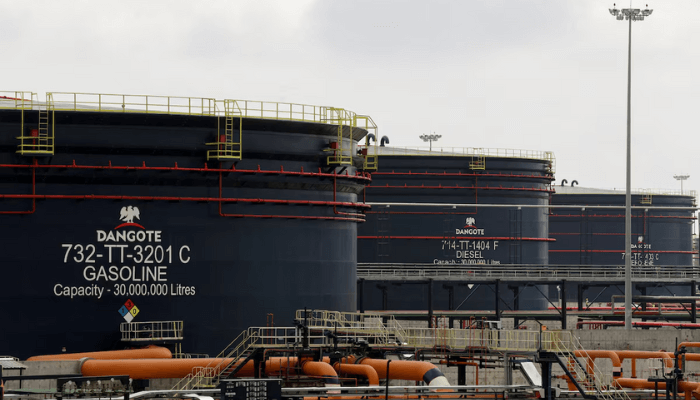
Dangote Group has hired Jonathan Zarembok, a veteran crude oil trader with experience at BP and Eni, as the conglomerate seeks to strengthen the trading operations behind its refinery business and expand its presence in global oil markets.
The appointment has not been publicly announced, and its timing and specific role remain unclear, according to people familiar with the development who spoke to Bloomberg and requested anonymity.
Zarembok most recently co-headed physical crude trading at Equinor ASA, according to his LinkedIn profile. Before joining Equinor, he spent about two decades working at BP Plc and Eni SpA.
Why the appointment matters
The hire signals Dangote Group’s efforts to build the commercial infrastructure needed to support its growing refining operations, extending its focus beyond processing capacity to crude procurement, trading and international market access.
Aliko Dangote, Africa’s richest man, built the refinery near Lagos to reduce Nigeria’s dependence on imported petroleum products. The facility has a processing capacity of 650,000 barrels per day and began operations in 2024 after years of delays and cost overruns.
As domestic output increased, Nigeria’s petrol imports declined sharply, while surplus products began reaching international markets.
Bloomberg has reported that major trading houses, including Vitol Group, Trafigura Group and BP, were among the refinery’s early buyers.
The expansion of the refinery’s trading operations is therefore important to its ability to secure crude supplies, manage product sales and compete in international markets.
Securing enough crude
One of the refinery’s biggest operational challenges has been securing sufficient crude oil to sustain production.
The state-owned Nigerian National Petroleum Company (NNPC), a minority shareholder in the refinery, has at times struggled to supply the volumes required by the facility.
Dangote has responded by sourcing crude from outside Nigeria, including Brazil and Equatorial Guinea, according to previous reports.
Physical crude traders play a central role in securing supplies, arranging shipping and managing price exposure across international markets. Their expertise becomes increasingly important as a refinery’s demand for feedstock expands.
Dangote Group has discussed increasing the refinery’s processing capacity to as much as 1.4 million barrels per day, which would place it among the world’s largest refining facilities and require access to additional crude sources.
The group has also explored refinery projects outside Nigeria, with Dangote advocating greater domestic refining across Africa rather than exporting crude oil and importing finished petroleum products.
Zarembok’s experience in physical crude trading could therefore prove valuable as the group expands its sourcing network and commercial operations.
Read also: Nigeria’s cement capacity to hit 82.3m tonnes as price growth slows in 2027
Building a trading business
Dangote has been developing its trading capabilities for several years.
Reuters reported in 2024 that the group planned to establish a London-based trading arm led by Radha Mohan, a former Essar trader who joined the company in 2021.
Bringing in a senior trader with experience at major international oil companies could deepen the group’s expertise in crude procurement and international trading.
Zarembok’s previous employers also have commercial links with the refinery.
BP has been among the major buyers of Dangote’s fuel, while Equinor is a significant crude producer and trader.
The movement of experienced traders between international oil companies, producers and independent trading houses is common in the industry. Dangote is among the newer players seeking experienced professionals as competition for trading talent intensifies.
The refinery’s growing output has become increasingly relevant to fuel markets in Europe and West Africa, while geopolitical tensions in the Middle East have heightened interest in alternative sources of diesel supply.
The BP lawsuit
Zarembok’s recruitment also brings renewed attention to an employment dispute involving his former employer, BP, which was reported in 2021.
The hire also revives an older story. Zarembok was a plaintiff in a London employment case against BP that was reported in 2021.
He traded on BP’s West Africa desk and was dismissed in April 2020. His claim was that he was let go after raising concerns about payments in Nigeria. BP says otherwise: it denies the allegations, says the working relationship had broken down irretrievably, and says Zarembok did not raise specific corruption concerns at the time.
What he alleged is specific. Under Nigerian rules, oil companies had to work with local firms to obtain crude cargoes from NNPC, which were sold below market prices and were highly lucrative. BP had repeatedly missed out.
In 2017, it chose to use a local agent rather than form a joint venture with a Nigerian company. BP ultimately paid that agent $900,000 after winning two cargoes. Zarembok said agent fees in Nigeria ran about ten times those paid elsewhere, and he described the stated reasons for them as a sham.
He also pointed to an email from a BP executive in Nigeria, which said 2018 was an election-prep year and that the recipients would understand what that meant. The executive later apologised for what he called slothful communication.
Zarembok called the message a clear red flag, arguing the implication was that pressure to pay bribes would follow.
A third episode involved a planned seven-year crude supply deal under which BP would lend NNPC hundreds of millions of dollars. Zarembok said BP again considered using an agent who added little value. The deal collapsed after the agent sought fees of about $2 million a year for the life of the contract.
BP defended the payments, saying its deal governance board, which included the trading floor’s most senior executives, scrutinized them. Its lawyers said the bribery allegations were investigated and couldn’t be substantiated. The suit also named Dan Wise, BP’s head of crude trading, as a defendant. BP said it was defending the case in full.
An NNPC spokesman didn’t immediately respond to requests for comment when the case was reported.
Scrutiny of oil trading intermediaries
The dispute emerged amid wider scrutiny of the use of intermediaries by international oil trading companies to secure access to crude supplies and government-linked transactions.
Gunvor Group reduced its reliance on agents in 2019 after admitting that a former employee had bribed officials in the Republic of Congo.
Glencore Plc also faced corruption investigations involving payments to NNPC officials, with a former trader pleading guilty to corruption-related offences.
In August, Glencore’s new chief executive said the company no longer used middlemen in oil trading.
Dangote Group has not publicly commented on Zarembok’s appointment. The available information also does not establish the outcome of the BP employment dispute.

Dipo Oladehinde is a skilled energy analyst with experience across Nigeria’s energy sector alongside relevant know-how about Nigeria’s macro economy.
He provides a blend of market intelligence, financial analysis, industry insight, micro and macro-level analysis of a wide range of local and international issues as well as informed technical rudiments for policy-making and private directions.


