

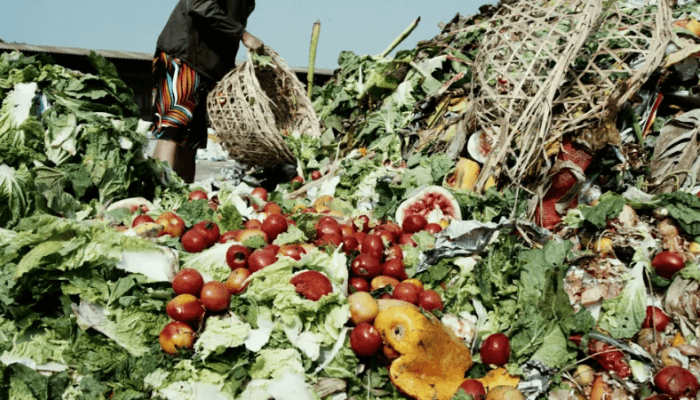
Nigeria cannot tackle its food affordability crisis by producing more alone. It must also stop losing so much of what it already grows. Farmers invest in production and transport, only for much of their harvest to deteriorate before reaching consumers. This makes post-harvest management central to national agricultural policy.
The scale is considerable. The Organisation for Technology Advancement of Cold Chain in West Africa (OTACCWA) estimated that Nigeria lost between 30 million and 40 million metric tonnes of food to post-harvest inefficiencies in 2025, representing between ₦3.5 trillion and ₦5 trillion in economic losses. These are industry estimates, not an audited national account. They represent wasted food, water, energy, labour, land and capital.
Although headline inflation eased to 14.06 percent in October 2026, food inflation remained at 19.13 percent year-on-year. Cadre Harmonisé estimated that 26.8 million Nigerians faced acute food insecurity between October and December 2026, with 33.5 million projected to face crisis-level food insecurity or worse during the June–August 2027 lean season. Insecurity, high input costs, climate pressures, transport expenses and weak purchasing power also constrain food access. But avoidable losses worsen the crisis.
“Infrastructure must serve small farmers and traders. Collection centres should be close to production areas, with cold-storage facilities along agricultural corridors and near consumption markets. Tariffs must be affordable and operations commercially sustainable.”
According to the Lagos State Waste Management Authority, the Ikosi-Ketu Fruit Market generates about 30 tonnes of waste daily, approximately 90 per cent organic. Much fruit is discarded after long journeys and poor handling. Traders transporting oranges, pineapples and other fruits from northern and central Nigeria face high haulage costs, poor roads, vehicle breakdowns and a lack of temperature-controlled transport. Some arrive in poor condition, forcing distress sales or losses.
This is not simply a storage problem. Produce is damaged during harvesting and loading, deteriorates on poor roads or remains unsold because producers, markets and processors are poorly connected. A cold room at the destination cannot compensate for careless handling at the farm or days of exposure to heat in transit. Nigeria needs to protect food from harvest to consumption.
The Federal Government’s Nigeria Postharvest Systems Transformation Programme (NiPHaST), unveiled in September 2025, is a welcome recognition of the challenge. Its proposed household storage technologies, community warehouses, cold rooms and strategic silos point in the right direction. But announcing facilities is not reducing losses. The Ministry of Agriculture and Food Security should publish an implementation plan identifying locations, financing, construction schedules, operating arrangements and expected capacity. It should disclose how much produce the programme is expected to preserve and how results will be independently measured.
Infrastructure must serve small farmers and traders. Collection centres should be close to production areas, with cold-storage facilities along agricultural corridors and near consumption markets. Tariffs must be affordable and operations commercially sustainable. Public-private partnerships can attract investment, provided pricing, maintenance and access for smallholders are transparent. Solar-hybrid and energy-efficient cooling systems should be considered where electricity is unreliable.
Transportation requires equal attention. Rural roads connecting farming communities to markets should be prioritised according to the volume and value of produce they carry. Governments should identify critical food corridors and publish rehabilitation schedules. Operators should invest in refrigerated vehicles and suitable packaging. Reusable plastic crates can reduce the bruising caused when delicate fruits are carried in unsuitable sacks. These improvements can protect consignments at modest cost.
Nigeria must strengthen food processing. Fruits that cannot be sold fresh quickly should find alternative markets through juice, concentrates, purees and dried products. Processing extends shelf life, creates jobs and gives farmers buyers during gluts. But plants need dependable raw materials, reliable energy and finance. Government should support small and medium-sized processors through equipment leasing and affordable working capital. Incentives should be tied to results: capacity installed, local produce purchased, jobs created and farmers paid.
Waste recovery must not be confused with preventing food losses. Lagos State’s Ikosi-Ketu biodigester, inaugurated in February 2026, converts organic market waste into energy. Plans to replicate it are commendable. However, converting spoilt fruit into energy does not recover its food, income or nutritional value. Produce still safe to eat should first be redirected to buyers, processors or food-redistribution organisations. Biodigestion and composting should be reserved for waste that cannot reasonably be recovered.
Food safety remains essential. Cold rooms without clean water, drainage, hygiene and temperature monitoring can create new risks. Market authorities must provide sanitation and enforce handling and storage standards.
Nigeria must measure post-harvest investments by food saved, income protected and improvements in market supply, not by warehouses or cold rooms announced. Government should establish a national baseline for losses and publish annual reductions by crop. States should report market waste, while operators disclose storage utilisation, costs and performance.
Increasing output without protecting the harvest will continue to waste investment, weaken farmers’ incomes and constrain food availability. A harvest is not an agricultural success if much of it rots before reaching the table. Nigeria must learn to preserve the value of what it grows.


