

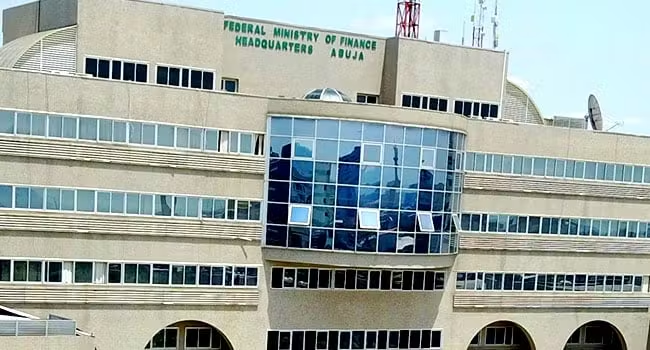
The Federal Government exceeded its 2026 domestic borrowing target by September, raising N20.39 trillion against its full-year target of N18.4 trillion, according to a state of Nigeria’s Financial Markets Q3 2026 report.
The report compiled by the Financial Markets Dealers Association (FMDA) showed that the government had borrowed about 111 per cent of its annual domestic borrowing target by 30 September, with three months remaining in the fiscal year.
The development comes amid concerns that increased government borrowing could limit the availability of credit to businesses, as lending to the Federal Government continues to grow faster than credit to the private sector.
According to the report, net domestic borrowing rose from N10.74 trillion at the end of June to N20.39 trillion by the end of September.
This means the government borrowed an additional N9.65 trillion in the third quarter alone, representing nearly 90 per cent of the amount recorded in the first half of the year.
The N18.4 trillion domestic borrowing target is part of the N29.2 trillion new borrowing provision in the 2026 Appropriation Act. The borrowing plan also includes N10.79 trillion in external financing.
Treasury Bills, Bonds Drive Increased Borrowing
The report showed that the government relied heavily on Treasury bills and Federal Government bonds to raise funds during the third quarter.
Treasury bill allotments increased by 33 per cent to N8.14 trillion, with 364-day instruments accounting for N7.08 trillion, or about 87 per cent of the total.
After accounting for N2.64 trillion in maturing Treasury bills, net new borrowing through the instruments stood at N5.49 trillion.
Similarly, Federal Government bond sales increased by 44 per cent quarter-on-quarter to N4.14 trillion.
The June 2038 bond attracted the largest subscription, with sales of N2.438 trillion, representing about 59 per cent of total bond sales during the period.
The September 2036 bond recorded N889 billion in sales, while the April 2037 and January 2035 bonds attracted N492 billion and N320 billion, respectively.
The figures show that the government had already exceeded its planned domestic borrowing for the year before entering the final quarter.
Government Borrowing Grows Faster than Private-Sector Credit
The FMDA report also highlighted a growing imbalance between credit extended to the Federal Government and loans available to businesses.
Broad money supply, measured by M3, increased by 24.5 per cent year-on-year to N146.6 trillion in September 2026.
However, credit to the Federal Government grew much faster, rising by 63.1 per cent to N39.40 trillion.
In comparison, private-sector credit increased by 15.7 per cent to N83.93 trillion, although it declined by N537.6 billion between August and September.
Based on the reported growth rates, government credit increased by about N15.2 trillion over the 12 months, compared with an increase of N11.4 trillion in private-sector credit.
This means the Federal Government accounted for 57 per cent of the combined increase in credit to the government and private sector.
The trend raises concerns about the ability of businesses, particularly manufacturers and small and medium-sized enterprises, to access affordable financing.
Government securities have remained attractive to investors because of their relatively high returns. During the third quarter, the 364-day Treasury bill offered a true yield of approximately 18.9 per cent.
The report also put investors’ holdings of Central Bank of Nigeria (CBN) bills at N5.60 trillion, noting that the instruments accounted for 74 per cent of the increase in broad money supply in September.
UPDATE NEWS:
Nigerians can now invest ₦2.5 million on premium domains and profit about ₦17-₦25 million. All earnings paid in US Dollars. Rather than wonder,
click here to find out how it works.
